
Beyond Prep: Integrating Real-Time AI into the Deposition Room
Attorneys have already embraced AI to prepare for depositions. The next opportunity is to give AI access to what the witness is actually saying while the deposition is happening.
By Readback CLO, Dean Whalen
Something fundamental has changed in legal technology. Not long ago, attorneys were asking whether they should use AI. In 2026, that question has largely been answered.
Attorneys are using AI to prepare cases, analyze discovery, review pleadings and legal research, and increasingly, prepare for depositions. They load the deposition notice and relevant case materials into the AI platform they already use and ask it to develop a witness-specific outline, identify issues and suggest areas of questioning.
They are seeing the value. But there is a disconnect.
The attorney walks into the deposition with an AI-assisted understanding of the case. Then the witness begins answering questions and the AI workflow often stops.
The most important new information in the case is being generated, but it isn’t necessarily being used while it is happening.
That information is the witness’s testimony.
What If the Deposition Became Part of the AI Workflow?
Imagine beginning a deposition with the same AI-generated outline and the same case materials.
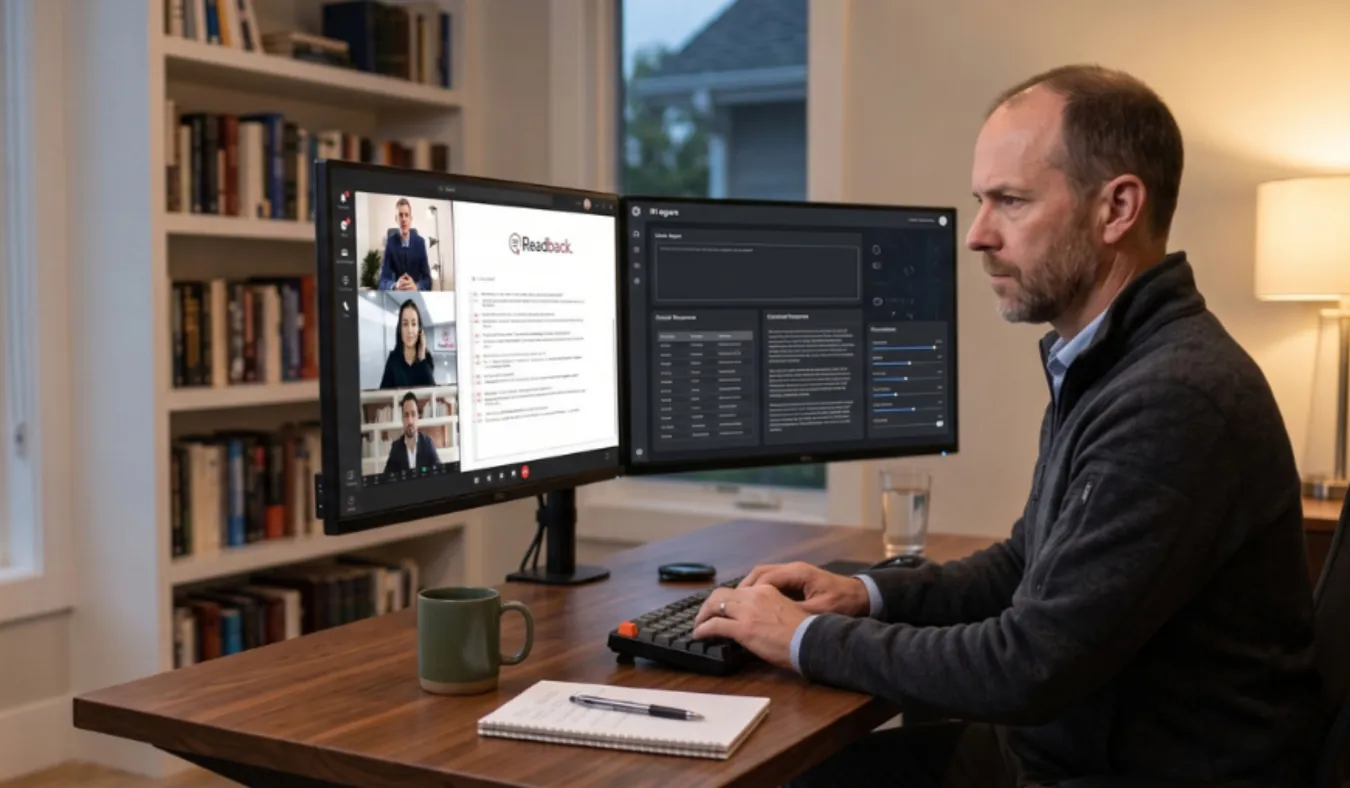
But now the attorney has access to the transcript in real time.
The testimony can be exported during the deposition and placed into the AI platform the attorney already uses. An associate can manage the process. The attorney can ask for a break. Or the testimony can be exported at a natural stopping point.
The attorney can then Prompt:
What answers require follow-up?
Did the witness say anything inconsistent with the discovery?
Which areas of my outline have not been adequately addressed?
Did the witness make an admission I should explore?
What potential impeachment issues should I examine?
The workflow changes from:
Ask → Answer → Move on
to:
Ask → Answer → Analyze → Follow Up.
The lawyer remains in control. AI simply provides another way to evaluate what the witness has said while the witness is still there.
A Second Opportunity: Don’t Close the Deposition Until You Know You Got What You Needed
Real-time analysis doesn’t have to happen continuously. There is another powerful use of the transcript: a final quality-control check before ending the deposition.
An attorney can export the testimony and ask AI to compare it against the deposition objectives and the case materials. This can be particularly valuable when specific testimony may be needed for summary judgment.
For example:
I need clear testimony establishing these facts for a potential summary judgment motion. Review this deposition and identify whether the witness gave clear, unambiguous testimony on each point.
The AI may identify that an answer was incomplete, qualified or ambiguous. The attorney now has an opportunity to go back and clarify it.
The lawyer doesn’t have to discover weeks later, while preparing a motion, that the testimony wasn’t as clear as it needed to be.
The deposition itself becomes the last opportunity to fix the problem.
Completing the AI-Powered Deposition
The opportunity is remarkably simple.
Prepare with the AI you already use.
Take the deposition with Readback.
See the testimony as it happens.
Export it.
Put it into the AI you already trust.
Use the analysis to follow up or make sure you’ve obtained the testimony you need before you end the deposition.
No new AI platform. No new technology ecosystem. No unnecessary fees. Just a better connection between the technology attorneys already use and the information being generated in the deposition room.
The legal profession has moved beyond asking whether it should use AI. Now the question is how to use it more effectively. Readback believes the answer is simple: Give AI access to the testimony. That is the promise of Active Reporting. Not replacing the lawyer. Not replacing the lawyer’s AI. Connecting the two.
See how you can take your depositions to the next level with Readback. Visit Readback.legal/live-demo to schedule a personalized demo with our team.
Privilege, Security, and Supervision Risks
While leveraging AI in deposition workflows offers significant efficiency, attorneys must navigate strict legal and ethical boundaries. Courts are finding attorneys may be waiving attorney client privilege in certain circumstances:
- Loss of Attorney-Client Privilege & Work-Product Protection: Inputting case facts, discovery materials, or live deposition transcripts into consumer-grade or public AI tools (such as free tiers of Claude or ChatGPT) waives legal privilege. In United States v. Heppner, the court held that using consumer AI models destroys any “reasonable expectation of confidentiality” because terms of service permit vendor data review, retention, and disclosure. Always use firm-approved, enterprise-grade, or legal-specific AI platforms that contractually guarantee Zero Data Retention and SOC 2 Type II compliance [citation:here and here].
- Mandatory Supervision & Human Verification: Generative AI tools predict text; they do not reason about doctrine, jurisdiction, or legal consequences. Under ABA Model Rules and work-product requirements, all AI-assisted tasks must be performed under direct counsel direction (“Lawyer-in-the-Loop”) [cite:here and here]. Attorneys remain fully accountable for verifying every fact, citation, logical deduction, and jurisdictional standard generated by AI before relying on it in a proceeding or filing.
* Disclaimer: Readback is neither a law firm nor a substitution for legal advice. This post should not be taken as legal opinion or advice.